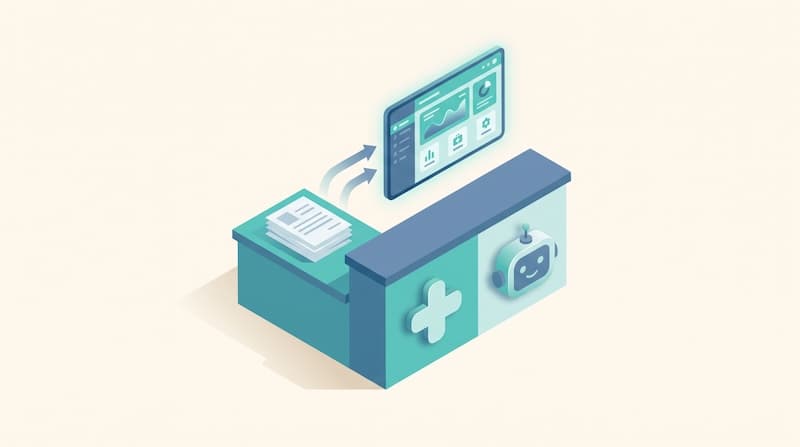
AI Patient Intake for Small Clinics: Cutting Front-Desk Load Without Adding Staff
Your front desk is drowning in calls, forms, and reminders — and hiring isn't cheap or fast. Here's how AI intake takes the repetitive load off your team without replacing the human touch patients need.
Walk into any small clinic at 9am and you'll see the same thing: a front desk trying to do six jobs at once. The phone's ringing, someone's checking in, a patient's filling out the same paper form they filled out last visit, and three voicemails are waiting about appointments. Your staff are good at this, but there's only so much of them to go around — and hiring another receptionist is expensive and slow.
The instinct is to push people harder. The better move is to take the repetitive work off their plate entirely, so the humans handle the parts that actually need a human.
Where the front desk time really goes
If you tracked a receptionist's day, a large chunk of it isn't care or judgment — it's the same handful of repetitive tasks: answering "are you open," "do you take my insurance," "can I move my appointment"; chasing patients to fill out intake forms; and phoning round with appointment reminders to cut no-shows. Every one of those is necessary. None of them needs a trained person doing it by hand.
That's the opening. You don't need AI to replace your front desk. You need it to absorb the repetitive load so your team has room to breathe and to be present with the patient in front of them.
What AI intake actually handles
Think of it as a tireless assistant sitting behind your phone and your forms:
- Answering the routine calls and messages. Hours, location, insurance, "can I reschedule" — answered instantly, day or night, without pulling anyone off the desk. Anything sensitive or unusual gets handed straight to a person.
- Collecting intake before the visit. Patients complete their history and details through a simple conversation on their phone ahead of time, so they arrive ready and your desk isn't handing out clipboards.
- Reminders and no-show follow-up. Automatic reminders go out, patients can confirm or move their slot, and gaps get flagged so you can fill them — instead of staring at an empty room.
The rule that matters: anything clinical, anxious, or out of the ordinary goes to a human immediately. The AI handles the volume, not the judgment.
What this typically looks like
A realistic, illustrative picture — not a specific clinic. A two-doctor practice with a busy front desk spends a big part of every day on repeat calls and reminder chasing, and loses a meaningful slice of slots to no-shows.
After putting AI intake in front of the phone and forms, the routine calls get answered automatically, patients arrive with their paperwork already done, and reminders cut the no-show rate. The receptionist's day stops being a firefight — they're actually available to the patient standing at the desk. The clinic handled more visits without adding a person, and the team stopped dreading Monday mornings.
The trust question, answered plainly
Healthcare has a higher bar, and rightly so. Two things matter. First, patients should always be able to reach a human easily — the AI is a front door, not a wall. Second, patient information has to be handled properly and securely, in line with the rules you already work under. Any intake tool that can't clearly answer how it protects patient data isn't one to put in front of your patients. Get that right and this becomes a relief for staff and patients alike, not a risk.
A sensible first step
Start narrow: put AI on the routine phone questions and appointment reminders only. That alone gives your desk noticeable breathing room, and it's low-risk because nothing clinical touches it. Once your team trusts it, add pre-visit intake.
If you want a clear read on which front-desk tasks are safe to hand off first — and what that would free up for your team — our free AI-readiness audit covers it in a few minutes, or book a call to talk it through.