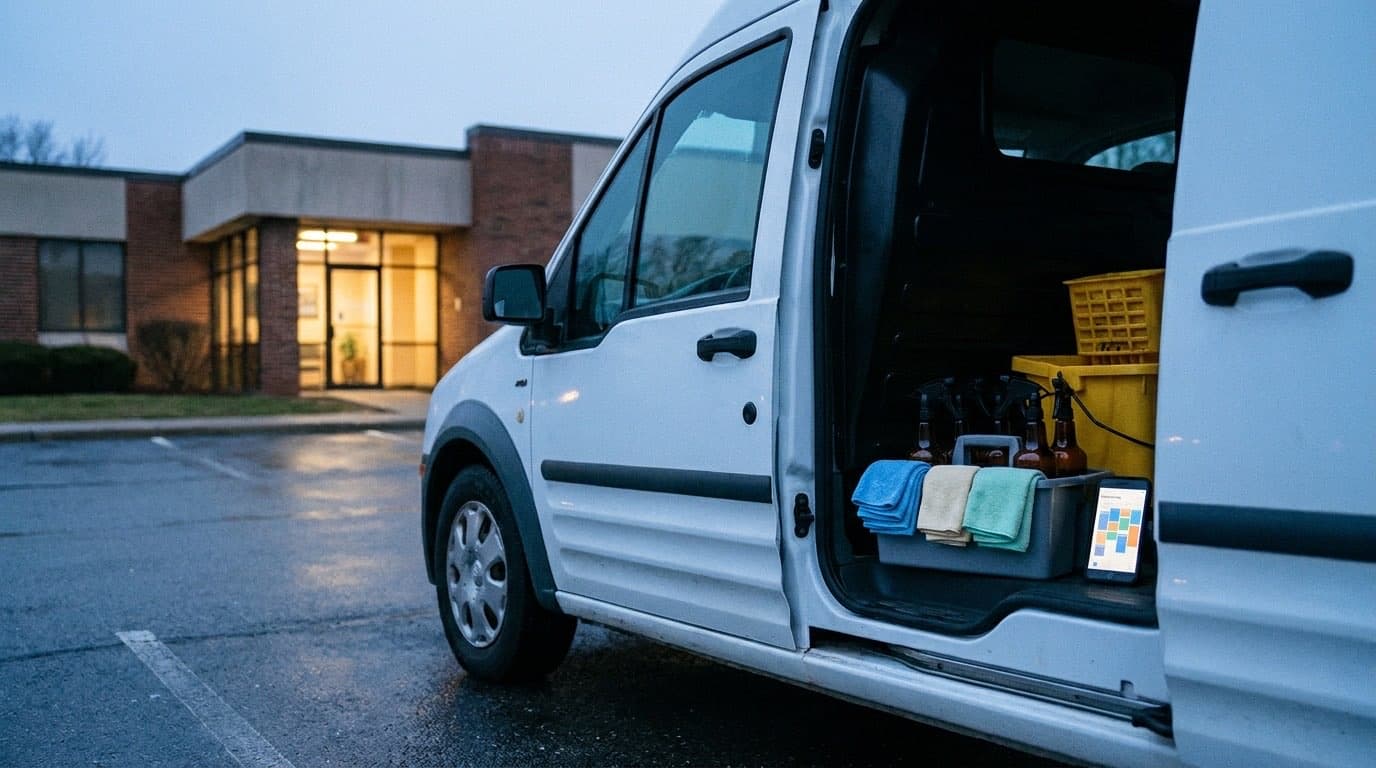
AI for a Cleaning Business: Running the Office While Your Crews Are Out
In a small cleaning company the person who should answer the phone is usually out cleaning. An AI assistant can take quote requests, draft prices from square footage and frequency, rebook visits when a cleaner calls in sick and ask every client for a review. Walkthroughs, final prices and complaints stay with you.
AI for a cleaning business pays off in the office work that piles up while everyone is out cleaning. In most small cleaning companies the owner answers the phone and writes the quotes, often from the driveway of a client's house. An AI assistant can take the quote requests that arrive in the evening and turn square footage and frequency into a draft price. It can also rebook the day when a cleaner calls in sick, send the supply order you approve and ask every client for a review.
Some decisions stay with you. You walk an office before you bid on it and set the final price yourself, and you decide who goes into a client's home. Complaints about damage or a missing item go to a person the same day.
Residential and commercial cleaning break in different places
A residential cleaning company lives on recurring visits. A client books a cleaning every week or every two weeks, plus the occasional deep clean or move-out job, and expects the same person or team to show up. The pressure points are the quote, the first visit and the morning a cleaner can't come.
A commercial janitorial firm lives on contracts. You walk the building, price it, and send crews at night. The BLS Occupational Outlook Handbook notes that because office buildings are often cleaned while they are empty, many cleaners work evening hours. So the crew is working while the client's facilities manager is at home, and the messages from both sides land at hours when nobody is at a desk.
Both kinds of business share the same bottleneck. One or two people carry the office in their heads, and they're also on the schedule.
Quote requests that arrive after six
A homeowner fills in your web form at 9 p.m. A property manager emails at 11 asking whether you can take on a second building. If either one waits until tomorrow afternoon for a reply, they've probably asked someone else too.
An AI assistant can answer the call, text, form or email when it arrives and ask what you'd ask. You write the questions. These are a reasonable start, and yours will differ:
| Residential question | Commercial question | Why it matters |
|---|---|---|
| Square footage, or bedrooms and bathrooms | Square footage, plus the type of space: offices, restrooms, break rooms, lobby | The base of the price |
| How often: weekly, every two weeks, monthly, one time | How many nights a week, and which | Frequency changes the rate and the crew plan |
| Standard clean, deep clean or move-out | What's in scope: trash, floors, restrooms, windows, kitchens | Sets the task list for the draft |
| Pets, and anything the cleaner should avoid | Hours the building is empty, alarm and access rules | Decides when a crew can work |
| How the cleaner gets in: someone home, key, lockbox | Who supplies paper goods and soap | Changes the price and the supply plan |
The assistant then sends a summary to whoever prices the job and tells the customer when to expect a quote. For a commercial lead it offers walkthrough times from your calendar. Our AI lead responder is the piece that answers those calls and messages and books the next step.
On day one I'd set one rule. The assistant takes access details but never repeats them. Lockbox codes and alarm codes go into your scheduling software, not into a text thread, and the assistant doesn't read them back to anyone who asks for them by message.
From square footage and frequency to a draft price
Most residential pricing already follows rules, even if they only live in the owner's head. A base rate by size, an adjustment for frequency, an extra for a deep clean, and perhaps a first visit priced as a deep clean before the recurring rate starts. Write those rules down and an AI can apply them to every inquiry. Your office then opens a draft with the arithmetic done.
The draft should say what it doesn't know. A form can't tell you that a "standard clean" hasn't been cleaned in a year, or that the 2,000 square feet include a finished basement full of boxes. Have the AI flag any inquiry that falls outside your grid, such as a very large home, a move-out with no photos, or a request for work you don't do, and route those to a call or a visit instead of a price.
Commercial bids work differently. The number comes from the walkthrough, and the walkthrough comes from you. What an assistant can do is take your walkthrough notes or a voice memo from the parking lot, list each area with its square footage and frequency, apply the production rates you use for each type of space, and add the supplies line if you're providing them. You check the labor hours against what you saw and set the price. Once you approve a quote, residential or commercial, the assistant can send it and book the first visit.
Our AI quote automation builds this kind of draft from your own price list. If your prices aren't written down anywhere yet, our guide to getting quotes out the same day starts there.
Recurring visits, sick calls and rescheduling
Once a client is on a recurring schedule, the assistant can handle the routine messages around it. It sends the reminder the day before with the arrival window. It answers "can you come Thursday instead this week?" by checking the schedule and offering the slots your rules allow. It notes a skipped visit and confirms the next one.
The hard morning is the one where a cleaner texts at 6:30 a.m. that they can't make it. Here's a made-up example of how that morning can go. A cleaner with four homes on Tuesday calls in sick. The assistant looks at who else is working that day, who is nearby and who has cleaned those homes before. In its draft, two homes move to another cleaner's afternoon, one moves to Thursday, and the fourth client gets a call because their notes say they only want their regular cleaner. Your scheduler reads the plan, changes what doesn't fit, and approves it. Then the assistant texts each client the new time, and the name of the person coming if that changed.
That last step matters in this trade. A client handed a key to one person. Some clients won't mind someone new, and others will, so the assistant asks before it sends a stranger to the door. It never decides on its own.
Whether a cleaner is reliable, and what to do about a pattern of no-shows, are conversations for you, not for software.
Supplies and the chemical paperwork
Ordering supplies is part of the job. The same BLS page lists order cleaning supplies among a janitor's duties, next to cleaning restrooms and stocking them. In a small company, that usually means someone notices the last case of trash bags on Friday night.
An assistant can keep the count instead. Crews text a photo of the supply closet or tap a short checklist at the end of a shift, and the assistant compares it with the minimum you set for each item at each site. When something drops below that level it drafts the order to your supplier, and you approve it before it goes. For a commercial account where you supply the paper goods, the same count tells you whether the usage still matches what you priced.
New products bring paperwork. OSHA's Hazard Communication page says that all employers with hazardous chemicals in their workplaces must have labels and safety data sheets for their exposed workers, and train them to handle the chemicals appropriately. When a new chemical appears on an order, the assistant can check that its safety data sheet is in your files and remind you that the crews need training on it. It shouldn't answer a cleaner's question about mixing two products or treating a spill. That answer comes from the safety data sheet and a supervisor.
Review requests and complaints
After a visit, the assistant can send the review request. Send it to every client on the same schedule, for example after the second or third clean. The FTC's guidance on its consumer reviews rule takes the question "Can my business ask for reviews only from customers whom we think are happy with our services?" and answers that the rule does not contain a specific prohibition against such conduct, but this practice could violate the FTC Act. The same guidance says you can't suggest a review must be positive to earn a promised incentive. So write one message with no reward tied to a good rating, and have the assistant send it to everyone.
Complaints are a different job. Say a client reports a missed bathroom, or can't find a ring after the visit. The assistant logs the message, tells the client when a person will call, and alerts you right away. It can offer a re-clean slot only if your written policy says so. Anything about damage, a missing item or a cleaner's conduct goes to a person, and the assistant doesn't admit fault in your name.
If you want the general version of this, our post on jobs an AI employee shouldn't take on covers service businesses broadly.
Which job to hand over first
Start with whatever cost you the most last month.
If inquiries sat overnight, start with intake. Run the assistant on new quote requests for a few weeks and read every conversation. Check that it asks the right questions and that you're getting enough detail to price from.
If quoting is the bottleneck, start with the price grid. Take your last twenty residential quotes, have the AI draft each one from the original inquiry, and compare the drafts with what you sent. Wherever they differ, fix the rule. For commercial work, do the same with your last few bids and your walkthrough notes.
If mornings fall apart when someone calls in sick, start with the schedule. That one depends on clean data, so put every recurring client, address and preference into your scheduling software first.
Other trades break in other places. Our guide to AI for an HVAC business starts with missed calls and tune-up reminders, and the one on AI for a plumbing business starts with burst-pipe calls at night. For roofers, AI for roofing contractors starts with storm-week calls. Lawn care and landscaping companies get AI for a landscaping business, which covers estimates from lot measurements and rebuilding routes after a rain day. Our home services and trades page shows how we set this up for small service businesses.
Frequently asked questions
How can I use AI in my cleaning business?
Start with the office work that happens while you're out cleaning. An AI assistant can answer quote requests after hours, draft prices from square footage and frequency, rebook visits when a cleaner calls in sick, draft supply orders and send review requests. Walkthroughs, final prices and complaints stay with you.
Can an AI receptionist book cleaning jobs?
Yes, within rules you set. It can ask about size, frequency and access, and book a walkthrough from your calendar. Once you've approved the quote, it can book the first visit. Jobs outside your price grid, such as a very large home or an unusual request, go to you before anything is promised.
What is the best AI for a cleaning business?
There isn't one tool that does every job. Pick the job first, such as intake, quoting or rescheduling, then check what your scheduling or booking software already offers before adding anything. If you need it connected to your own price list and calendar, that's a build.
Will AI replace cleaning companies?
Cleaning a home or an office still takes people on site, so software doesn't replace the crew. What changes is the office side. An assistant can answer inquiries and do the pricing arithmetic, but a person still approves the price and decides who goes into a client's home.
If you'd like a second opinion on where to start, book a call and bring last month's quote requests. The AI-readiness audit is the do-it-yourself version.